pathoff← 대학·대학원 전체 나라

대학·대학원

우즈베키스탄

A degree for under two thousand a year — and half of Tashkent’s campuses hand out British ones.

4/5
재료 확인
아직 모르는 것: 학비
생활비
26.7% (미국 물가 대비)
A comparison of prices, not a budget: it says what things cost here against the United States, not what a month will cost you. Compared at country level, so capital cities and large metros run higher. The price level prices the basket residents buy, and a foreign renter cannot reach the cheap end of local housing — poorer countries may still sit too low here.
교육
An Uzbek degree works in Uzbekistan
Research impact 34th percentile globally — median of 2 ranked universities (CWTS Leiden Open Edition 2025). Research output, not teaching quality; it informs the band, it does not set the score.
졸업 후 취업
An employer, unless you are in software
치안
1.726 · 37th of 163
Thirty-seventh globally and second in its region behind Bulgaria — well above every other Central Asian state

세부 자료는 아직 영어입니다. 어느 언어로 보셔도 같은 수치입니다.

이 수치들의 출처

재료 하나에 한 줄입니다. 아무거나 열어보면 출처와, 얼마나 믿는지와, 마지막으로 확인한 때가 나옵니다.

학비아직 자료 없음

Withdrawn in September 2026. This record carried $1,600 a year inside a range of $1,250 to $1,950, and its own account named no figure either number could have come from — the three sums it quoted were $3,050, $3,800 and $4,400, all of them foreign branch campuses it then explained are not Uzbek degrees. The entry argued against its own head number and kept it. Searched again at source, and the university publishes more than this record thought. Samarkand State University’s own page for foreign students gives a table: an international bachelor’s on a contract basis is 22 times the minimum wage, a master’s 27 times, and a master’s for citizens of Afghanistan 23 times. The separate table above it, at 14 times for a bachelor’s, is the other one — this record had quoted 14 as the international rate. The page also prints the money, and that is the part that cannot be used. It gives 23,100,000 soums for the international bachelor’s, worked out from a minimum wage the page states "as of 01/12/2023", under a footnote about what happens if the wage rises during the 2023-2024 academic year. The wage has risen since. So the multiple is a current fact and the sum beside it is a two-year-old arithmetic, and the university is telling you which is which. Multiplying 22 by today’s wage ourselves is the composition section 12-4-1 declined: it makes one figure depend on two sources, one of which moves, and no test can check it. So what this country has is a rule rather than a price, and the rule is recorded here: an international bachelor’s at a state university costs 22 times the national minimum wage, restated whenever the wage moves. The branch campuses that do print prices — Westminster International University in Tashkent at UZS 38,820,000 for 2026/27, MDIS Tashkent at $4,400 for students outside the CIS — award their parent institutions’ degrees, which section 9-1 says is not this country’s degree.

A state university degree here costs a fraction of a branch campus one and travels a fraction as far, which is the trade this page describes. The figure is missing because the price is set as a multiple and the sum the university prints beside it is dated 2023 — not because nobody looked.

신뢰도
수치 없음
마지막 확인
2026-09
생활비26.7% (미국 물가 대비)

World Bank, 2024, CC BY 4.0: the PPP conversion factor for household consumption is 3372.9898 local currency units per international dollar, against an official exchange rate of 12652.2868 to the US dollar. Their ratio, 0.267, is the price level against the United States, whose own ratio is 1 by construction. Both figures are theirs; the division is ours. See the Pathoff method, section 12.

A comparison of prices, not a budget: it says what things cost here against the United States, not what a month will cost you. Compared at country level, so capital cities and large metros run higher. The price level prices the basket residents buy, and a foreign renter cannot reach the cheap end of local housing — poorer countries may still sit too low here.

신뢰도
출처를 보고 저희가 만든 수치
교육An Uzbek degree works in Uzbekistan

Pathoff education rubric (the Pathoff method, section 9-1), degree band "Locally solid, externally unknown": National degrees are recognised across the former Soviet space and work well in the Uzbek labour market. Mid-band because outside that space no Uzbek institution is a name. Note what this band is not measuring: Westminster International University in Tashkent states that its graduates receive University of Westminster degrees, and the other foreign campuses work the same way. Under the Pathoff method, section 9-1 those are British and American degrees taken in Tashkent, not Uzbek ones, and they do not lift this score.

Research impact 34th percentile globally — median of 2 ranked universities (CWTS Leiden Open Edition 2025). Research output, not teaching quality; it informs the band, it does not set the score.

신뢰도
출처를 보고 저희가 만든 수치
졸업 후 취업An employer, unless you are in software

Pathoff outcome rubric (the Pathoff method, section 10-2), degree outcome band "A route that needs an employer": Graduation confers no period to stay and work requires an employer-held permit. At the foot of the band, and held up from lower only by the IT Park regime, which gives resident companies simplified hiring for foreign staff and their founders a three-year renewable visa.

신뢰도
출처를 보고 저희가 만든 수치
규정
저희가 아는 변경 없음
마지막 확인
2026-09
치안1.726 · 37th of 163

Global Peace Index 2026, Institute for Economics and Peace: score 1.726, ranked 37 of 163. Both figures are theirs; we publish them as they are.

Thirty-seventh globally and second in its region behind Bulgaria — well above every other Central Asian state

신뢰도
출처에 그대로 적혀 있음

여기는 어떤 곳인가

Uzbekistan has imported foreign universities faster than any country its size, and that is the thing to understand before applying. The English-medium campuses in Tashkent mostly award their partner’s degree, not an Uzbek one. The national universities do award Uzbek degrees, publish what a foreigner pays, and cost less than two thousand dollars a year.

절차는 이렇습니다

1

Get an invitation, because the university applies before you do

A student visa is issued on the request of the institution, not on your own application. The A-1 category exists for foreign students enrolled at an Uzbek institution and the STD category for exchange students, and both are granted for up to a year at a time. So the sequence is an offer first, then the institution asking the ministry, then you at a consulate.

⏱ Weeks, and it starts at the university
2

Pay the consular fee — $160 for a year, single entry

The ministry publishes the fee by validity rather than by purpose, so a student pays the same tariff as anyone else staying that long: $160 for a single-entry visa up to a year, $250 if you need it multiple-entry, and $10 more for each extra entry on a single-entry visa. There is no separate student rate and no processing fee on top.

⏱ Applications are considered within four working days
3

Expect the tuition to be quoted in a way you have to convert

State universities set international fees as a multiple of the national minimum wage rather than as a sum, so the price moves when the wage does and no figure appears on the page. The campuses that print a number are mostly foreign: Westminster in Tashkent publishes UZS 38,820,000 a year, and MDIS publishes $4,400 for a non-CIS international student against UZS 37,000,000 for an Uzbek one. Ask what the multiple is and what the wage is on the day.

소요 기간 미확인
4

Renew every year, and know the visa is not a stay

Both student categories are capped at one year and renewed on the institution’s request, so continued enrolment is what keeps you legal. The visa carries no work right and converts to nothing on graduation — the exception the work-after-study ingredient on this page describes is the IT sector, which has its own route, not a general one.

⏱ Annual

유학생이 가는 곳

Tashkent
Every foreign campus and most of the employers
Samarkand
The national university that publishes its international rate

위의 재료를 열어보면 그 수치가 어디서 왔는지, 얼마나 믿는지, 마지막으로 언제 확인했는지가 나옵니다. 어느 것도 공식 출처를 대신하지 않습니다. 마지막 검토 2026-09-04.

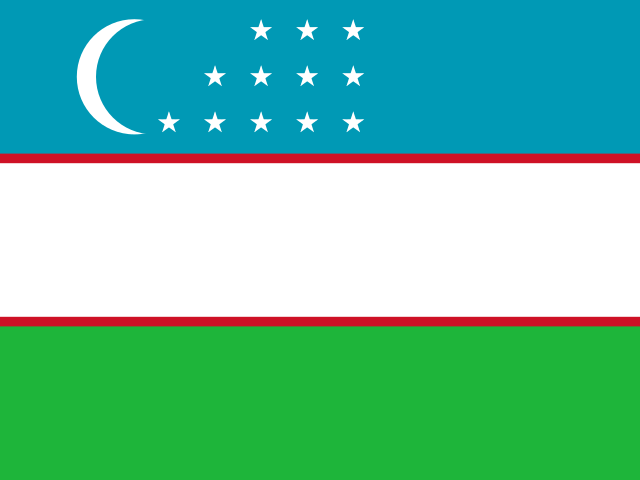
사진: 우즈베키스탄 · Bobyrr, 라이선스 CC BY-SA 4.0, 출처 Wikimedia Commons.